
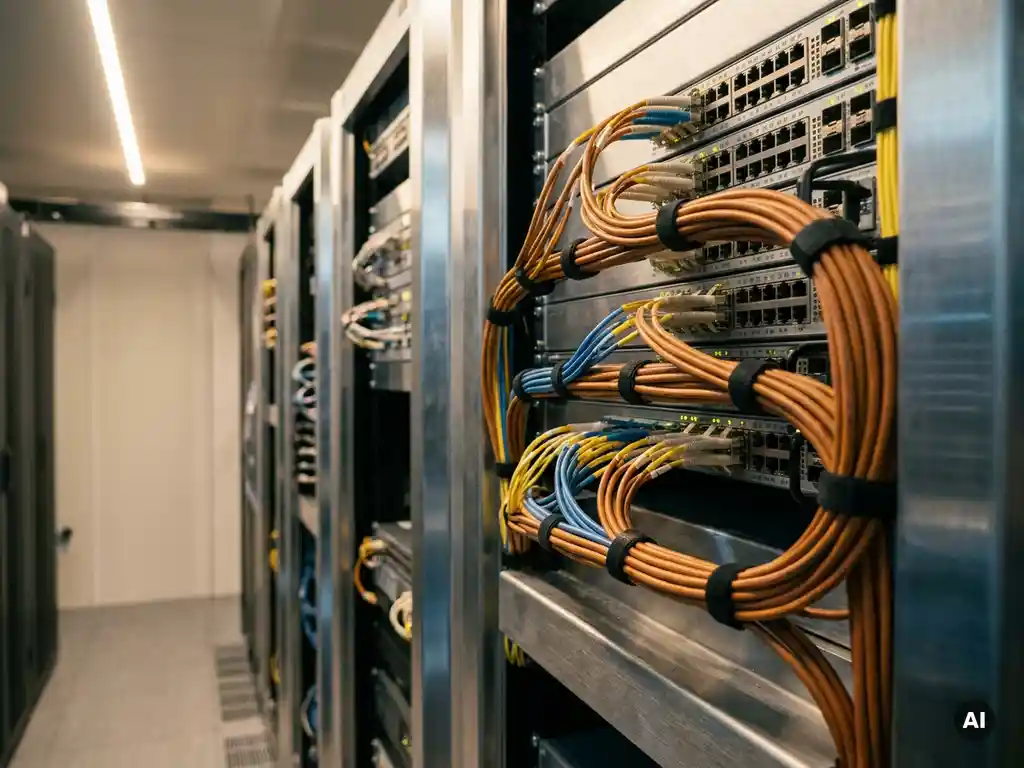
To structure data for generative AI, you need clean, well-documented, semantically rich data that is consistently formatted, reliably delivered, and stored in a way that AI models can actually query and use. This means moving beyond basic data warehousing and thinking about how your data will be retrieved, chunked, embedded, and referenced at inference time. The sections below unpack the most important questions around building AI-ready data infrastructure.
What kinds of data does generative AI actually need?
Generative AI models need structured, semi-structured, and unstructured data, but what matters most is that each type is clean, labeled, and contextually meaningful. Structured data from databases and ERP systems provides factual grounding. Documents, manuals, and logs supply the unstructured context that makes AI responses genuinely useful in real-world scenarios.
In practice, most enterprise generative AI use cases rely on a combination of:
- Structured records: product data, sensor readings, maintenance logs, financial transactions
- Semi-structured content: JSON exports, API responses, configuration files
- Unstructured documents: PDFs, technical manuals, emails, support tickets, inspection reports
The challenge is not collecting this data. Most organizations already have it. The challenge is making it coherent: consistent schemas, reliable timestamps, clear ownership, and enough metadata that an AI model can understand what a piece of data actually represents and when it was valid.
How does data quality affect generative AI output?
Data quality directly determines the reliability of generative AI output. If the data feeding a model is incomplete, contradictory, or outdated, the model will produce confident-sounding answers that are factually wrong. In AI systems, poor data quality does not produce obvious errors; it produces plausible errors, which are far more dangerous.
This is especially relevant in sectors like manufacturing and energy, where decisions based on AI output can have real operational consequences. A model trained or prompted with stale sensor readings, mismatched unit conventions, or conflicting records from different business units will generate responses that look reasonable but reflect a broken data foundation.
The key dimensions of data quality that affect AI output are:
- Completeness: missing values degrade model confidence and retrieval accuracy
- Consistency: the same entity described differently across sources creates confusion at inference time
- Timeliness: AI models used for operational decisions need data that reflects current reality, not last week’s batch
- Lineage: knowing where a data point came from and how it was transformed is essential for debugging and compliance
Building data quality checks directly into your pipelines (not as an afterthought) is what separates AI-ready data infrastructure from a collection of tables that happens to exist.
What is RAG and how does it change how data must be structured?
Retrieval-Augmented Generation (RAG) is a technique where a generative AI model retrieves relevant information from an external data source at query time, rather than relying solely on what it learned during training. RAG fundamentally changes how data must be structured because the model needs to find and use your data dynamically, which means your data must be chunked, embedded, and indexed in a way that supports fast, semantically accurate retrieval.
In a RAG architecture, documents and records are broken into chunks, converted into vector embeddings (numerical representations of meaning), and stored in a vector database. When a user asks a question, the system retrieves the most semantically relevant chunks and passes them to the language model as context.
This has direct implications for how you prepare your data:
- Documents need to be chunked thoughtfully: too large and retrieval becomes imprecise; too small and context is lost
- Metadata must be attached to each chunk so the model can filter by source, date, or category
- Content must be clean and deduplicated; a RAG system that retrieves three slightly different versions of the same procedure will confuse the model
- Data must be kept current; a RAG pipeline is only as fresh as its last update cycle
RAG is currently the dominant pattern for enterprise generative AI because it allows organizations to ground model responses in their own proprietary data without retraining the model itself. Building a reliable RAG system starts with a solid data platform and engineering foundation — one that ensures your documents and records are clean, current, and consistently structured before they ever reach the retrieval layer.
How should data pipelines be designed for generative AI workloads?
Data pipelines for generative AI workloads must be designed with freshness, observability, and semantic consistency as first-class requirements. Standard ETL pipelines optimized for batch reporting are often too slow, too opaque, and too brittle to support AI use cases that depend on current, trustworthy data delivered reliably.
The key design principles for AI-ready pipelines include:
- Incremental processing: pipelines should update data continuously or near-continuously rather than in large overnight batches
- Built-in data quality checks: validation rules should run at ingestion, not as a manual audit after the fact
- Lineage tracking: every transformation should be logged so you can trace where a data point came from and catch errors upstream
- Alerting and observability: when a pipeline breaks or a source stops sending data, someone needs to know before the AI model starts returning stale answers
- Schema evolution handling: source systems change; pipelines must handle schema drift without silently corrupting downstream data
For generative AI specifically, pipelines also need to feed embedding and indexing workflows. This means the pipeline does not just land data in a table; it also triggers chunking, embedding generation, and vector index updates so that your RAG system stays current with the underlying data.
What’s the difference between a data lake, lakehouse, and vector database for AI use cases?
A data lake stores raw data at scale but offers limited querying structure. A lakehouse adds a transactional layer on top of a lake, enabling SQL queries, ACID compliance, and governance alongside raw storage. A vector database is purpose-built for storing and retrieving embeddings; it is not a replacement for a lake or lakehouse, but a specialized component in an AI architecture.
For generative AI workloads, the three serve distinct roles:
- Data lake: ingests and stores raw data from all sources, including OT systems, documents, and logs; useful as the landing zone before transformation
- Lakehouse: provides the governed, queryable layer where cleaned and modeled data lives; the right foundation for analytics, ML feature stores, and structured AI inputs
- Vector database: stores embeddings for semantic search and RAG retrieval; examples include Pinecone, Weaviate, and pgvector on PostgreSQL
Most mature enterprise AI architectures use all three in combination: the lakehouse as the central platform for governed data, and a vector database as the retrieval layer that the generative AI application queries at runtime. Choosing one over another is not the right framing; the question is how they connect.
How do you make OT and sensor data usable for generative AI?
Making OT and sensor data usable for generative AI requires bridging the gap between operational technology systems (SCADA, MES, historian databases, IoT edge devices) and the data platform where AI workloads run. This means normalizing time-series data, enriching it with contextual metadata, and integrating it into the same governed pipelines that handle your IT data.
OT data presents specific challenges that standard data engineering approaches do not fully address:
- High-frequency, high-volume streams: sensor data arrives at intervals of seconds or milliseconds; pipelines must handle this without dropping readings or creating gaps
- Inconsistent tagging: sensor tag names vary by machine, plant, and vendor; without normalization, the same physical measurement appears under dozens of different identifiers
- Context poverty: a raw sensor reading has no meaning without knowing what asset it belongs to, what operating state the machine was in, and what the acceptable range is
- Proprietary protocols: OPC-UA, Modbus, and MQTT require specific connectors to extract data from the edge into a cloud or on-premises platform
Once OT data is normalized and enriched, it becomes genuinely powerful for generative AI. A model grounded in real-time production data can answer questions about equipment behavior, flag anomalies in natural language, or generate maintenance recommendations based on actual operating history, not generic documentation.
This OT-IT integration work is where the gap between a theoretical AI strategy and a working AI system is most often found. The architecture can be sound, the model can be capable, but if the sensor data never arrives clean and in context, the AI cannot do its job. Keeping those pipelines stable and well-monitored over time is also where managed data services can make a meaningful difference, ensuring your infrastructure remains reliable as data volumes and sources grow.
How we help you build AI-ready data infrastructure
At Itility, we work with organizations in manufacturing, energy, and agritech to build the data foundation that generative AI actually needs. We do not draw architecture diagrams and hand them over; we build and deploy alongside your team, from pipeline design to production.
What we deliver includes:
- Data platform design and build: lakehouse architecture on AWS, Azure, or GCP, designed around your AI and analytics use cases
- Robust ETL/ELT pipelines: with built-in data quality checks, lineage tracking, and alerting so pipelines do not break silently
- OT-IT integration: normalizing SCADA, MES, historian, and sensor data into your platform so the factory floor becomes part of your AI-ready data ecosystem
- Data governance and quality enforcement: ownership structures, catalogs, and quality rules written in code, not left in a document
If your team is spending more time fixing pipelines than delivering value, or if your AI initiatives are stalling because the data underneath is not trustworthy, we would like to talk. Explore our data platform and engineering services or get in touch directly to discuss your situation.
Frequently Asked Questions
How do I know if my organization's data is actually ready for a generative AI project?
A practical starting point is to audit three things: whether your key data sources have consistent schemas and reliable update frequencies, whether you can trace the origin and transformation history of your most important data assets, and whether your data quality issues are documented and actively managed. If you cannot confidently answer those three questions, your data infrastructure needs work before a generative AI layer will deliver reliable results. Starting with a focused data readiness assessment on one high-priority use case is usually more productive than trying to fix everything at once.
What are the most common mistakes organizations make when structuring data for generative AI?
The most frequent mistake is treating data preparation as a one-time task rather than an ongoing operational discipline — teams clean up a dataset for an initial proof of concept, but have no pipeline to keep it current or catch quality regressions over time. A second common mistake is neglecting metadata: documents and records loaded into a vector database without source, date, or category information make it nearly impossible to filter retrieval results accurately or debug why the model is returning incorrect answers. Building quality checks and metadata standards into the pipeline from day one prevents both problems.
How should we decide what chunk size to use when preparing documents for a RAG system?
Chunk size depends on the nature of your documents and the types of questions your AI system needs to answer. For technical manuals or procedural documents where each section is self-contained, chunking by logical section or heading often works better than fixed character counts. A practical approach is to test retrieval quality with a set of representative questions at different chunk sizes — typically between 256 and 1024 tokens — and measure whether the retrieved chunks contain enough context to answer the question without including irrelevant content. Overlapping chunks (where each chunk shares some content with the next) can help preserve context across boundaries.
Can we use our existing data warehouse as the foundation for generative AI, or do we need to rebuild?
In most cases, you do not need to rebuild from scratch, but you likely need to extend and complement what you have. An existing data warehouse can continue to serve structured, governed data to AI workflows, but it typically needs to be paired with a vector database for semantic retrieval and updated pipelines that support more frequent refresh cycles than traditional batch reporting requires. The more important question is whether your warehouse data is clean, consistently modeled, and well-documented enough to be trustworthy as AI input — if the underlying data quality is poor, a new architecture will not fix that.
How do we handle sensitive or confidential data when building a generative AI system?
Sensitive data requires a layered approach: classify data by sensitivity level before it enters your AI pipelines, apply access controls at the storage and retrieval layer so the AI system can only surface information that the querying user is authorized to see, and avoid including personally identifiable or commercially sensitive content in training or fine-tuning datasets unless you have explicit governance approval to do so. In RAG architectures specifically, metadata filtering can be used to restrict which document chunks are retrievable based on user role or data classification. Logging every retrieval and generation event also creates the audit trail needed for compliance in regulated industries.
How long does it typically take to go from raw data to a working generative AI system in production?
For a well-scoped use case with a defined data domain — such as a maintenance Q&A assistant grounded in equipment manuals and work order history — a realistic timeline from data assessment to a production-ready system is three to six months, assuming the underlying data sources are accessible and the integration work is not starting from zero. The largest time variable is almost always data readiness: organizations with clean, well-governed pipelines already in place can move significantly faster, while those dealing with fragmented OT data, undocumented schemas, or no existing data platform will need to invest in the foundation before the AI layer can be built on top of it.
What should we prioritize first — improving data quality broadly or picking a specific AI use case to drive the work?
Starting with a specific, high-value use case is almost always the more effective approach, because it gives your data quality and infrastructure work a concrete target to aim at rather than an abstract standard to meet. Choose a use case where the business value is clear, the relevant data sources are identified, and the failure modes are tolerable enough to learn from. Use the requirements of that use case to drive targeted data quality improvements, pipeline builds, and governance decisions — then carry those patterns forward to the next use case. Trying to achieve broad data quality improvement without a driving use case tends to stall because it is difficult to prioritize and even harder to demonstrate value.